Your domain name is one of your most valuable digital assets. It connects customers to your website, email, apps, landing pages, and online services. But while many domain owners focus on SSL certificates, hosting security, and strong passwords, they often overlook one important layer of protection: DNSSEC.
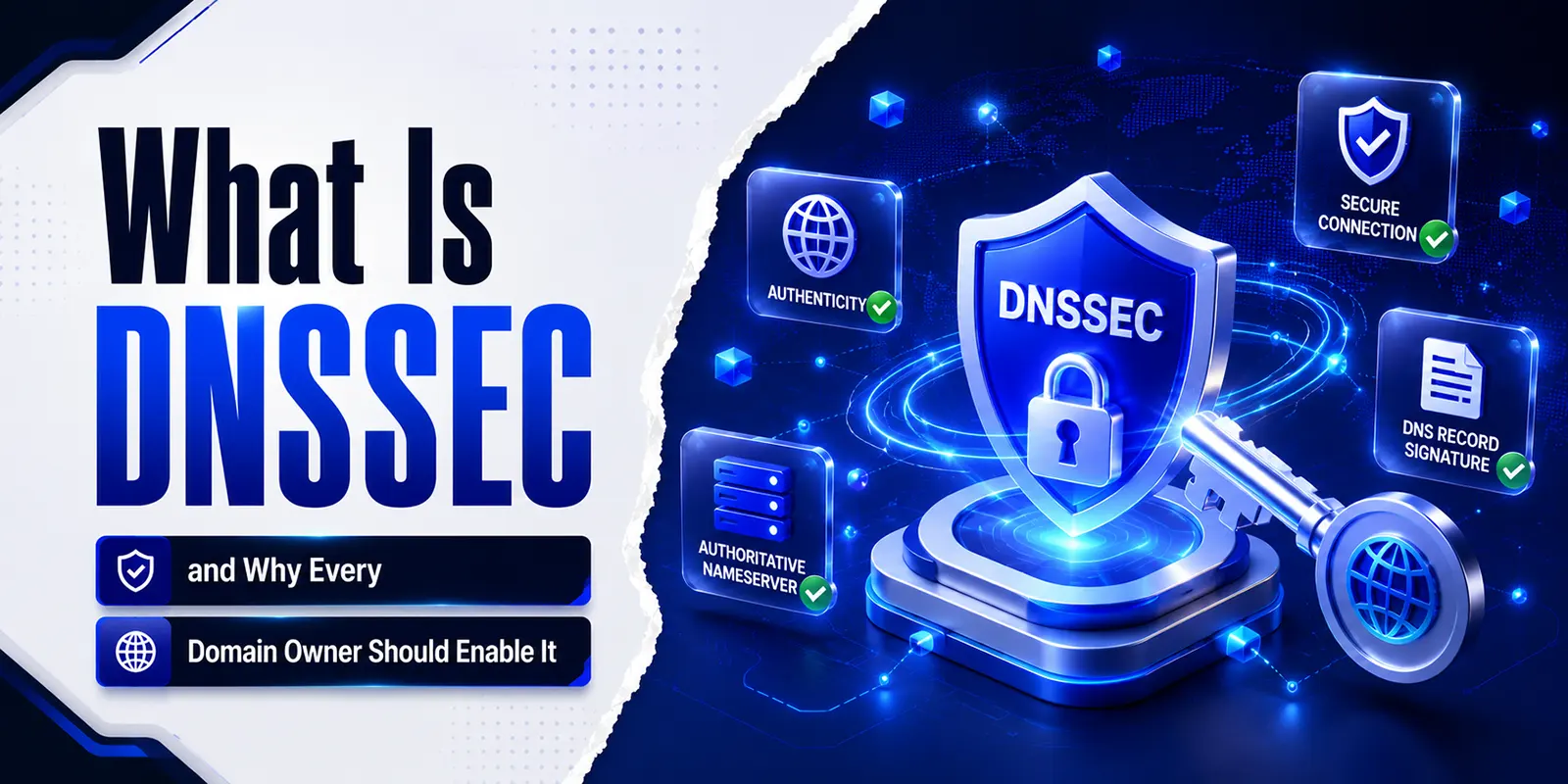
DNSSEC stands for Domain Name System Security Extensions. It is a security technology that helps protect domain names from DNS spoofing, cache poisoning, and other attacks that can redirect visitors to fake or malicious websites.
For businesses, startups, eCommerce stores, SaaS platforms, agencies, and personal brands, DNSSEC is no longer something to ignore. If you own a domain, enabling DNSSEC can help protect your visitors, your brand reputation, and your online trust.
At HashDomains.com, we believe domain security should be part of every domain owner’s strategy, not an afterthought. In this guide, we’ll explain what DNSSEC is, how it works, why it matters, and why every domain owner should consider enabling it.
What Is DNSSEC?
DNSSEC (Domain Name System Security Extensions) is a security technology that helps protect DNS records from tampering and unauthorized modifications.
In simple terms, DNSSEC verifies that the DNS information users receive is authentic and comes from the correct source. It helps prevent attackers from manipulating DNS responses and redirecting visitors to fraudulent or malicious websites.
When DNSSEC is enabled, DNS records are digitally signed using cryptographic keys. These digital signatures allow DNS resolvers to validate that the information has not been altered during transmission.
It is important to understand that DNSSEC does not encrypt website traffic. Encryption is handled by HTTPS and SSL/TLS certificates. Instead, DNSSEC protects the integrity and authenticity of DNS responses, helping users reach the intended website safely.
Simple DNSSEC Meaning
DNSSEC helps verify that your domain’s DNS records are authentic and have not been altered by attackers.
Think of it this way:
- DNS tells browsers where to find a website.
- DNSSEC helps confirm that those directions are genuine and trustworthy.
Without DNSSEC, attackers may attempt to manipulate DNS responses and redirect users to fraudulent websites. DNSSEC adds a verification layer that helps prevent this from happening.
Why Was DNSSEC Created?
Traditional DNS was designed for speed and reliability, not strong security. Because of this, attackers can try to manipulate DNS responses and send users to fake websites.
This can lead to serious problems such as:
- Visitors being redirected to phishing websites
- Login credentials being stolen
- Email traffic being manipulated
- Malware being delivered through fake pages
- Brand trust being damaged
- Customers losing confidence in your website
DNSSEC was created to reduce these risks by making DNS responses verifiable.
How DNSSEC Works
DNSSEC works through digital signatures and cryptographic keys.
Here is a simplified version of the process:
- Your DNS records are signed with a private key.
- A public key is published in your DNS zone.
- When a user visits your domain, DNS resolvers check the signature.
- If the signature is valid, the user is sent to the correct website.
- If the signature is invalid or missing, the DNS response may be rejected.
This creates what is called a chain of trust.
The chain starts at the root DNS level, continues through the top-level domain such as .com, and ends at your domain.
For example:
Root DNS → .com → hashedomains.com
Each level helps verify the next level, making it harder for attackers to forge DNS responses.
What DNSSEC Protects Against
DNSSEC helps protect your domain from several DNS-based threats.
1. DNS Spoofing
DNS spoofing happens when attackers provide fake DNS information to redirect users to the wrong website.
For example, a user may type your real domain name but be sent to a fake website that looks like yours.
DNSSEC helps prevent this by verifying that DNS responses are authentic.
2. DNS Cache Poisoning
DNS cache poisoning is when attackers corrupt the stored DNS information inside a resolver or server.
If successful, many users may be redirected to a malicious website without realizing anything is wrong.
DNSSEC helps detect tampered DNS records and prevents fake responses from being accepted.
3. Man-in-the-Middle DNS Attacks
In a DNS-related man-in-the-middle attack, an attacker interferes with DNS communication and tries to change the result.
DNSSEC makes this much harder because modified DNS responses will fail validation.
4. Domain Impersonation Risks
Attackers may try to use DNS weaknesses to make fake websites appear more convincing. DNSSEC reduces the chance of users being silently redirected away from your real website.
DNSSEC vs SSL: What Is the Difference?
Many domain owners ask: “If I already have SSL, do I still need DNSSEC?”
The answer is yes. SSL and DNSSEC protect different parts of the online journey.
| Feature | DNSSEC | SSL/HTTPS |
| Protects | DNS records | Website connection |
| Main purpose | Verifies DNS authenticity | Encrypts data between browser and server |
| Prevents | DNS spoofing and cache poisoning | Data interception and tampering during website sessions |
| Works before website loads | Yes | No |
| Replaces the other? | No | No |
SSL protects the connection after the user reaches your website. DNSSEC helps protect the path that gets users to the correct website in the first place.
For stronger security, domain owners should use both DNSSEC and HTTPS.
Why Every Domain Owner Should Enable DNSSEC
DNSSEC is important for all domain owners, not just large enterprises. Here’s why.
1. It Protects Your Brand Reputation
If attackers redirect visitors from your domain to a fake website, your brand may lose trust even if the attack was not directly caused by your website.
Customers may think your business is unsafe, unreliable, or careless with security.
DNSSEC adds protection at the domain level and helps reduce this risk.
2. It Helps Protect Customers
Visitors trust your domain when they type it into a browser or click a link. DNSSEC helps make sure they reach the correct destination.
This is especially important for websites that handle:
- Customer accounts
- Payments
- Login pages
- Personal information
- Business inquiries
- Downloads
- Client portals
If your website collects any user data, DNSSEC should be part of your security checklist.
3. It Reduces Phishing and Redirection Risks
Phishing attacks often rely on tricking users into visiting fake websites. DNSSEC cannot stop every phishing attack, but it can help prevent attacks where DNS records are manipulated to redirect visitors.
For businesses, this extra layer can make a major difference.
4. It Strengthens Domain Security
Your domain is more than a name. It is the gateway to your website, email, apps, and online identity.
DNSSEC strengthens that gateway by making DNS responses verifiable.
At HashDomains.com, we encourage domain owners to treat domain security as seriously as hosting security, website backups, and SSL certificates.
5. It Supports Trust in Online Transactions
If your domain is used for eCommerce, SaaS, banking, healthcare, education, legal services, or client portals, users expect a secure experience.
DNSSEC helps build trust by protecting the DNS layer that connects users to your digital services.
6. It Helps Prevent Silent Attacks
Some DNS attacks are dangerous because users may not notice anything unusual. They type the correct domain but land on a fake page.
DNSSEC helps prevent these silent redirection attacks by rejecting invalid DNS responses.
7. It Is a Long-Term Security Best Practice
Cybersecurity threats continue to grow. Domain owners need multiple layers of protection, and DNSSEC is one of the most important domain-level protections available.
Enabling DNSSEC today helps prepare your domain for a safer, more secure internet.
Who Should Use DNSSEC?
DNSSEC is beneficial for almost every domain owner, but it is especially important for businesses and organizations that rely on their websites, email systems, or online services.
This includes:
- Business websites
- eCommerce stores
- SaaS platforms
- Financial and healthcare organizations
- Educational institutions
- Government agencies
- Membership and client portals
- News and media websites
- Startups and growing brands
If your domain plays an important role in your business, customer communications, or online reputation, enabling DNSSEC is a smart security measure.
Does DNSSEC Improve SEO?
DNSSEC is not a direct Google ranking factor in the same way content quality, backlinks, mobile usability, and page speed can affect rankings.
However, DNSSEC can indirectly support SEO by improving trust, security, and reliability.
A secure domain helps protect users from malicious redirects and reduces the risk of security incidents that could damage your reputation, traffic, or search performance.
For SEO, your foundation should include:
- High-quality content
- Fast website performance
- Mobile-friendly design
- HTTPS
- Clean technical SEO
- Secure DNS configuration
- Reliable hosting
- Strong domain management
DNSSEC is part of a healthier and more secure technical foundation.
Does DNSSEC Protect Email?
DNSSEC can help protect the DNS records used by your domain, including records related to email security. However, DNSSEC alone does not fully secure email.
For stronger email protection, domain owners should also configure:
- SPF
- DKIM
- DMARC
- MTA-STS
- TLS reporting
DNSSEC supports DNS authenticity, while these email records help protect against email spoofing, phishing, and unauthorized sending.
For a professional domain setup, DNSSEC and email authentication should work together.
Key DNSSEC Terms
DNSSEC uses a few important records and concepts:
DNSKEY: Stores the public key used to verify DNSSEC signatures.
RRSIG: A digital signature attached to DNS records to confirm their authenticity.
DS Record: Connects your domain’s DNSSEC configuration to the parent zone (such as .com), creating a chain of trust.
Chain of Trust: The verification process that links the DNS root, top-level domain, and your domain to ensure DNS responses are authentic.
Most domain owners do not need to manage these records manually, but understanding their purpose can help when setting up or troubleshooting DNSSEC.
How to Enable DNSSEC
The exact steps for enabling DNSSEC vary depending on your domain registrar and DNS provider, but the general process is usually similar.
Step 1: Check Whether Your DNS Provider Supports DNSSEC
First, verify that your DNS hosting provider supports DNSSEC signing. Most modern DNS providers offer DNSSEC, although the setup process may differ.
Step 2: Enable DNSSEC for Your Domain
Log in to your DNS provider’s dashboard and locate the DNSSEC settings for your domain. Once DNSSEC is enabled, the provider will generate the necessary cryptographic keys and DNSSEC records.
Step 3: Add the DS Record at Your Registrar
After DNSSEC is enabled, your DNS provider will typically provide a DS (Delegation Signer) record. Add this record to your domain registrar’s DNSSEC settings.
The DS record links your domain to the parent zone (such as .com) and establishes the DNSSEC chain of trust.
Step 4: Verify DNSSEC Configuration
Use a DNSSEC validation tool to confirm that your domain is properly signed and that DNS responses are validating correctly.
Popular tools include:
- DNSViz
- Verisign DNSSEC Debugger
- ICANN DNSSEC Analyzer
Step 5: Monitor DNSSEC After Changes
Whenever you change DNS providers, update nameservers, or migrate your domain, review your DNSSEC settings carefully. Incorrect DNSSEC configuration can cause validation failures and make your website inaccessible to some users.
Important Warning: DNSSEC Must Be Configured Correctly
DNSSEC is powerful, but incorrect setup can cause problems.
If DNSSEC is enabled incorrectly, visitors may not be able to access your website. This usually happens when:
- DS records are outdated
- DNS keys are changed incorrectly
- DNS hosting is moved without updating DNSSEC
- DNS records are not signed properly
- The chain of trust is broken
Before enabling DNSSEC, make sure your registrar and DNS provider settings match.
If you are managing important business domains through HashDomains.com, treat DNSSEC setup as part of your domain security process and review the configuration carefully during any DNS migration.
DNSSEC Best Practices for Domain Owners
To get the most value from DNSSEC, follow these best practices.
1. Use a Reliable DNS Provider
Choose a DNS provider with strong uptime, DNSSEC support, and clear documentation.
2. Keep Registrar and DNS Provider Settings Aligned
Your registrar and DNS host must have matching DNSSEC information.
3. Be Careful During DNS Migrations
If you move DNS from one provider to another, update or remove old DS records before the switch is completed.
4. Monitor DNS Health
Use DNS monitoring tools to check for resolution issues, DNSSEC validation errors, and downtime.
5. Combine DNSSEC With Other Security Layers
DNSSEC is not a complete security solution on its own. Use it with:
- HTTPS
- Strong registrar account security
- Two-factor authentication
- Domain lock
- WHOIS/privacy protection where appropriate
- SPF, DKIM, and DMARC
- Regular website security updates
DNSSEC Checklist for Domain Owners
Use this checklist to quickly review your domain security setup:
- DNSSEC is supported and enabled by your DNS provider
- DS record is correctly configured at your registrar
- DNSSEC is validating properly (no errors in DNS lookup tools)
- HTTPS is active on your website
- Two-factor authentication is enabled on your registrar account
- Domain lock is turned on to prevent unauthorized transfers
- SPF, DKIM, and DMARC are configured for email security
- DNS changes are monitored regularly
- Domain renewal is active to avoid expiration
A secure domain depends on proper DNS configuration, strong account protection, and ongoing monitoring.
What Happens If You Do Not Enable DNSSEC?
If you do not enable DNSSEC, your domain may still work normally. Many websites operate without it.
However, your DNS records will not have the same level of cryptographic protection. This can leave your domain more exposed to DNS spoofing and cache poisoning attacks.
For low-risk personal websites, some owners may not think about DNSSEC. But for businesses, startups, eCommerce websites, SaaS products, and professional brands, the added security is worth considering.
Is DNSSEC Worth It?
Yes, DNSSEC is worth it for most serious domain owners.
It adds an important security layer to your domain, helps protect users from DNS-based attacks, and supports a stronger trust foundation for your website.
DNSSEC is especially worth enabling if:
- Your website receives customer traffic
- Your domain is connected to business email
- You manage payments or user accounts
- Your brand reputation matters
- Your website supports clients or members
- You want stronger domain protection
For modern domain owners, DNSSEC should be viewed as a security best practice.
Why DNSSEC Matters for HashDomains.com Users
At HashDomains.com, domains are more than digital addresses. They are business assets, brand identities, and trust signals.
Whether you are buying a premium domain, managing startup domains, protecting a brand portfolio, or launching a new online business, security should always be part of your domain strategy.
DNSSEC helps domain owners protect the path between users and websites. Combined with HTTPS, domain locking, strong account security, and proper email authentication, it creates a more secure foundation for your online presence.
If you are serious about protecting your domain, DNSSEC is a smart step.
FAQs About DNSSEC
What is DNSSEC in simple words?
DNSSEC is a security feature that verifies your domain’s DNS records are authentic and have not been altered by attackers.
Does DNSSEC encrypt website traffic?
No. DNSSEC does not encrypt traffic. HTTPS and SSL/TLS handle encryption, while DNSSEC verifies DNS authenticity.
Is DNSSEC the same as SSL?
No. DNSSEC protects DNS records, while SSL secures the connection between the browser and your website.
Can DNSSEC break my website?
Yes, if configured incorrectly. Misconfigured DNSSEC can cause domain resolution failures, which is why setup must be done carefully.
Does DNSSEC help SEO?
DNSSEC is not a direct ranking factor, but it improves trust and security, which can indirectly support SEO performance.
Does DNSSEC protect email?
DNSSEC helps validate DNS records used by email, but it does not fully secure email. You still need SPF, DKIM, and DMARC.
How do I enable DNSSEC?
DNSSEC is enabled through your DNS provider, then a DS record is added at your domain registrar. The exact steps vary by provider.
Is DNSSEC free?
In most cases, yes. Many DNS providers and registrars include DNSSEC at no extra cost, though some managed services may charge for setup.
Final Thoughts
DNSSEC is one of the most important but often overlooked domain security features.
It helps verify DNS responses, protects against DNS spoofing and cache poisoning, and reduces the risk of visitors being redirected to fake or malicious websites.
While DNSSEC does not replace HTTPS, SSL certificates, email authentication, or strong account security, it plays a critical role in protecting the DNS layer of your domain.
For every domain owner, especially businesses and startups, enabling DNSSEC is a practical way to strengthen trust, protect users, and secure your digital identity.
Your domain is the front door to your online presence. DNSSEC helps make sure visitors reach the right door.